

- How to Complete the Copyright Registration Procedure in India for Software and Online Content - August 30, 2026
- Provisional Patent Filing Process in India: Complete Guide to Costs, Forms and Deadlines - August 26, 2026
- Trademark Opposition Rules in India: Timeline & Evidence Filing - August 20, 2026
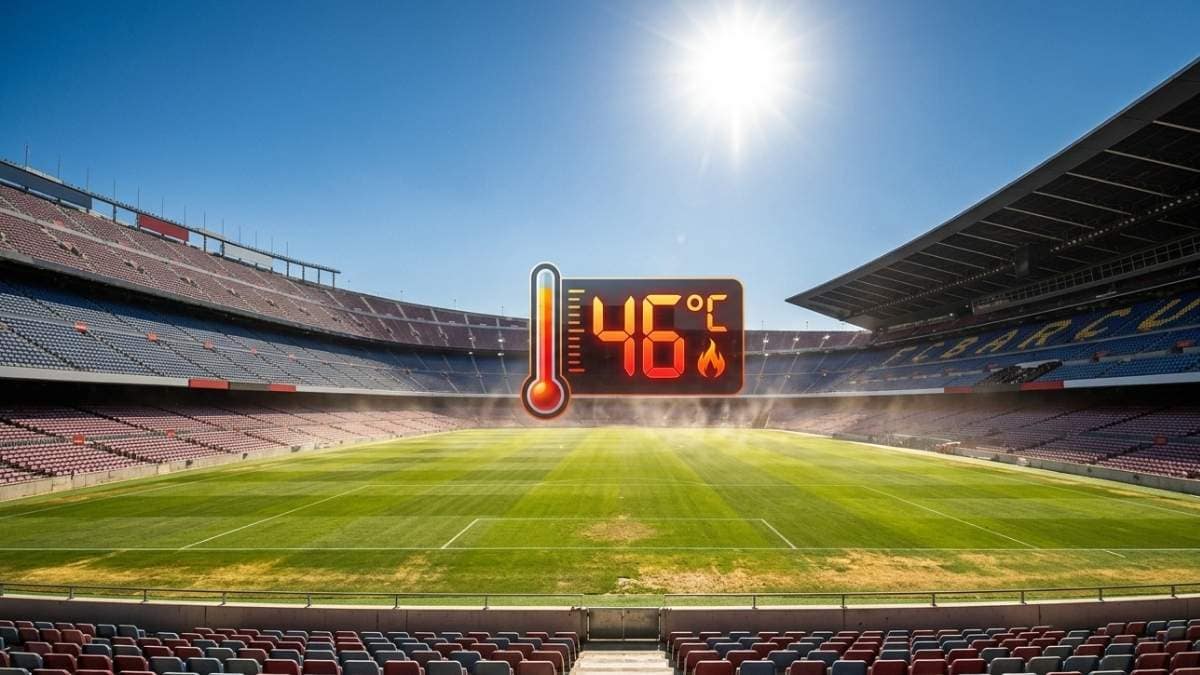
The 2026 FIFA World Cup is facing an unprecedented climate crisis, with scientific analysis showing that human-induced extreme heat threatens to impair player performance in 97 out of 104 scheduled matches across North America. A critical legal gap exists between FIFPRO’s science-backed safety threshold of 28°C WBGT and FIFA’s own postponement trigger of 32°C, leaving players exposed to conditions that international occupational health law deems unsafe.
The 2026 FIFA World Cup has also ignited a broader accountability battle, with over 100 professional players demanding FIFA drop fossil fuel sponsor Saudi Aramco — whose emissions directly worsen the very heat threatening their health on the pitch.
A landmark analysis published by Climate Central — a leading independent scientific organisation — has found that climate change is boosting the likelihood of performance-impairing heat in 97 out of 104 scheduled World Cup matches. Nearly half of all matches (49 of 104) carry at least a 50% probability of temperatures that impair athletic performance. According to Climate Central’s methodology, “performance-impairing heat” is defined as any condition exceeding 28°C (82.4°F), a threshold at which players demonstrably run slower, cover less ground, and experience significantly elevated physiological stress.
This is not a distant, hypothetical climate risk. It is a present, operational, and legal emergency — one that sits at the intersection of international sports governance, occupational health law, and environmental accountability.
Table of Content
Table of Contents
THE SCIENCE — WHAT THE DATA ACTUALLY SHOWS
The Climate Science Behind the Crisis
The evidence accumulated ahead of this tournament is among the most comprehensive ever produced for a single sporting event.
Climate Central’s analysis reveals that climate change increases the probability of dangerous heat by at least 10 percentage points in 26 specific matches. The most extreme example: the June 26 group-stage match in Guadalajara between Uruguay and Spain carries a 70% chance of performance-impairing heat — a figure that is 37 percentage points higher than it would be without human-induced climate change.
A parallel study by the World Weather Attribution (WWA) network, a coalition of leading climate scientists, found that roughly one quarter of all 104 World Cup matches are likely to be played in conditions that exceed the safety threshold recommended by the global players’ union FIFPRO. That represents nearly double the heat risk compared to the last time the United States hosted the tournament in 1994. According to WWA researchers, 14 out of 16 host locations experience levels of extreme heat that could be “potentially dangerous to players, match officials, and possibly spectators.”
A peer-reviewed study published in the International Journal of Biometeorology in 2025 (Lindner-Cendrowska et al.) found that four host cities exceed the 28°C threshold for dangerous conditions more than half the time during summer months. The research also noted that the high variation in conditions across North America makes this World Cup “especially difficult for players to cope with” compared to any previous tournament.
The scale of the warming trend at host venues is stark. Climate Central data shows that, on average, extremely hot June–July days now occur three times more often at US host cities than they did ahead of the 1994 World Cup. Miami and Mexico City have seen a sevenfold increase. At Mexico City’s historic Estadio Azteca — which will make history as the first stadium to host three World Cups — extreme summer heat days have surged from approximately two per year to eleven per year.
THE REGULATORY GAP — WHERE ENVIRONMENTAL LAW MEETS LABOUR LAW
The Legal Fault Line: FIFPRO Standards vs. FIFA’s Own Rules

The scientific consensus on heat danger is clear and settled. What is not settled — and what constitutes a live legal and regulatory dispute — is who bears the duty of care toward players, and at what threshold that duty is triggered.
The Wet Bulb Globe Temperature (WBGT) is the internationally recognised metric for measuring heat stress in occupational settings. Unlike air temperature alone, WBGT accounts for humidity, radiant heat from the sun, and air movement — making it a far more accurate measure of the physiological burden placed on the human body during strenuous activity.
FIFPRO, the global union representing professional footballers, has adopted science-backed WBGT thresholds consistent with international occupational health standards:
These thresholds align with standards set by the International Standards Organization (ISO), the US National Institute for Occupational Safety and Health (NIOSH), and the Occupational Safety and Health Administration (OSHA) of the US Department of Labour.
FIFA’s own tournament regulations, however, set a dramatically higher bar. Under existing FIFA guidelines, matches may proceed until WBGT levels approach or exceed 32°C — a full 4°C higher than the FIFPRO postponement threshold. In practical terms, this means players could legally be required to compete in conditions that international occupational health law considers unsafe for any worker performing strenuous physical activity.
Leading health experts have described this gap in the starkest possible terms. An open letter signed by prominent physiologists, climate scientists, and sports medicine academics from across Europe, North America, and Australia characterised FIFA’s existing guidelines as “impossible to justify” in light of current scientific understanding. The letter explicitly called for cooling breaks above 26°C WBGT and mandatory match delays or postponements above 28°C WBGT.
This is not a matter of regulatory inconvenience. As Professor Tipton, one of the signatories, stated: “Competitive exercise in hot environments can lead to a range of problems from impaired performance and enforced alterations in game strategy, to the medical emergency of heat stroke.”
The legal implications are significant. If a player suffers a serious heat-related injury — or worse, a fatal heat stroke — during a match played under conditions that exceeded FIFPRO’s science-backed safety thresholds, FIFA’s divergence from internationally recognised occupational health standards could expose it to substantial liability under labour law, tort law, and potentially sports arbitration proceedings.
In Kansas City during the 2024 Copa América — a tournament that served as a direct precursor to this World Cup — assistant referee Humberto Panjoj collapsed on the pitch and was hospitalised due to extreme heat, with temperatures reaching 93°F and humidity making it feel like 103°F. This was not a hypothetical scenario. It already happened.
PLAYER AGENCY AND CORPORATE ACCOUNTABILITY
Players Push Back: The Intersection of Labour Rights and Environmental Advocacy
Professional footballers have responded to this crisis with an unprecedented show of collective agency.
More than 100 current and former professional footballers signed an open letter urging FIFA to urgently strengthen its extreme-weather safety protocols before the tournament. Their demands included tougher heat thresholds for match postponement, extended cooling breaks (a minimum of six minutes rather than three), and improved pitch-side cooling infrastructure.
Crucially, the players did not stop at calling for protective measures during matches. They went further, identifying the root cause of the problem and demanding structural change at the governance level: they called on FIFA to end its sponsorship arrangement with Saudi Aramco, the world’s largest oil and gas company.
In 2024, FIFA announced a four-year sponsorship deal with Saudi Aramco reportedly worth approximately $400 million — making Aramco the tournament’s most prominent commercial partner. Saudi Aramco has been responsible for more than 4% of all global greenhouse gas emissions since 1965. The players’ argument is straightforward and legally cogent: it is a structural conflict of interest for a governing body to accept significant revenue from the fossil fuel industry while simultaneously claiming to protect players from the climate consequences of fossil fuel combustion.
Sports governance nonprofit FairSquare called the Aramco deal “the most dangerous example of fossil fuel advertising and sponsorship the world has ever seen.”
Over 130 professional women’s footballers separately signed a 2024 open letter addressed to FIFA President Gianni Infantino, criticising the Aramco partnership and accusing FIFA of damaging the long-term integrity of the women’s game.
A joint research report produced by Loughborough University, the University of Bristol, and the University of Manchester, released ahead of the tournament, concluded that football’s carbon footprint is “not simply caused by fan travel or stadiums, but is politically produced through decades of commercial growth, globalisation, ties to fossil fuel companies and Petrostates.” The researchers called for FIFA to stop awarding tournaments to petrostates, impose restrictions on fossil fuel ownership of clubs, and ban fossil fuel advertising in football altogether.
FIFA, in response to questions, defended its commercial partnerships and stated that it would invest 90% of World Cup revenue “back into the global game.” It said it had implemented strategies to reduce carbon emissions at the tournament. However, it is worth noting that in 2022, Switzerland’s advertising regulator demanded FIFA cease its claim that the Qatar World Cup was “carbon neutral,” ruling the messaging “false and misleading.”
ON-THE-GROUND DEVELOPMENTS — WHAT FIFA HAS ACTUALLY CHANGED
What Has Changed (and What Hasn’t) Going Into the Tournament
The pressure from FIFPRO, scientists, and players has produced some concrete — if limited — results.
Ahead of the tournament, FIFA announced that mandatory hydration breaks will be implemented in every single one of the 104 World Cup matches, at approximately the 22nd and 67th minutes of each game. These three-minute breaks will apply regardless of weather conditions, score, or stadium type. FIFA introduced this policy following a sobering dress rehearsal: during the 2025 FIFA Club World Cup held in the United States, Argentine midfielder Enzo Fernández suffered heat exhaustion and had to lie on the pitch during a match at MetLife Stadium in New Jersey, where temperatures reached 35.5°C with humidity above 54%. “The heat was incredible. I got dizzy during a play and had to drop to the ground. Playing in these temperatures is very dangerous,” Fernández later said.
Two matches at the Club World Cup — Benfica vs. Bayern Munich in Charlotte, and Chelsea vs. Esperance in Philadelphia — exceeded the WBGT level that FIFPRO considers unsafe for play. FIFPRO General Secretary Alex Phillips acknowledged that FIFA adapted its approach during that tournament in response to FIFPRO’s input, but stressed that “obviously, it would have been better if that happened in advance.”
FIFPRO is also exploring whether extending half-time to 20 minutes and introducing more frequent water breaks every 15 minutes during high-heat conditions would provide meaningfully better protection. These discussions are ongoing.
The fundamental regulatory gap — FIFA’s 32°C WBGT threshold for postponement versus FIFPRO’s 28°C threshold — has not yet been resolved as the tournament begins.
THE ECOLAW ANALYSIS
The EcoLaw Takeaway: When Climate Risk Becomes Legal Risk
The 2026 FIFA World Cup is not merely a sports story about uncomfortable playing conditions. It is a case study in how climate change generates cascading legal, regulatory, and commercial consequences for major global institutions.
Consider what this tournament requires FIFA to navigate simultaneously:
Occupational health liability — FIFA’s own safety rules diverge from internationally accepted labour standards, creating exposure if a player suffers serious heat-related harm.
Sponsorship contradictions — FIFA has accepted $400 million from the world’s largest oil company while simultaneously claiming sustainability commitments. This creates reputational, regulatory, and potentially legal risk under emerging ESG disclosure frameworks and advertising standards law.
Carbon footprint accountability — The expanded 48-team format means more matches, more travel, and more emissions. The 2026 World Cup is projected to be the most polluting sporting event in history. As carbon disclosure requirements tighten globally — under frameworks such as the EU Corporate Sustainability Reporting Directive (CSRD) and the ISSB climate standards — major sporting organisations will face growing legal pressure to account for and reduce their emissions, not merely offset them.
Athlete labour rights — The open letters from players, backed by their union FIFPRO, represent a form of collective action by workers demanding that their employer comply with internationally recognised occupational health standards. In jurisdictions where labour law applies to sporting activity, this pressure carries genuine legal weight.
The broader principle for environmental lawyers, compliance professionals, and policymakers is this: climate change does not arrive on a distant horizon. It arrives in the middle of a World Cup final, on a 35°C pitch, with no roof and no air conditioning. When the world’s most powerful sports governing body must navigate live climate data to protect its multi-billion dollar assets and its players’ lives, environmental law ceases to be a niche compliance exercise. It becomes a baseline requirement for operational viability.
Sources and Further Reading
2026 World Cup & Extreme Heat
A compiled directory of climate analyses, health reports, and player safety assessments.
1. Climate Data & Match Analyses
- Climate Central — 2026 World Cup Match Heat Analysis Comprehensive breakdown of project heat levels per match day. View Report →
- Climate Central — Stadiums Extreme Heat Trends Data analyzing localized multi-decade warming trends across host venues. View Report →
- World Weather Attribution — Climate Change as a Big Player Attribution study mapping the direct thumbprint of global warming on tournament conditions. View Analysis →
- PreventionWeb — The Hottest Tournament Yet Risk forecasting pointing to unprecedented thermal stress benchmarks. Read Article →
2. Medical Studies & Health Expert Warnings
- Lindner-Cendrowska et al. (2025) — International Journal of Biometeorology Peer-reviewed study evaluating extreme heat risk relative to FIFA’s scheduling. View PubMed Study →
- The Physiological Society — Open Letter to FIFA on Heat Safety Physiologists urging modern updates to standard thermal management protocols. Read Open Letter →
- Cool Down — Health Experts Proclaim Guidelines “Impossible to Justify” A stern medical coalition demanding immediate regulatory interventions. Read Declaration →
- UK Universities Joint Football & Climate Report Collaborative risk warnings issued across major research institutes.
3. Player Welfare & Geopolitical Advocacy
- FIFPRO — Player Workload Monitoring Report Union-backed safety warnings emphasizing heat risk overlays on existing fatigue. Read Labor Findings →
- Capital B News — FIFPRO vs. FIFA: The WBGT Gap Investigating the critical dispute over wet-bulb globe temperature measurements. Read Coverage →
- CBC Radio — FIFA, Saudi Aramco, and Player Demands Audio and print review tracking player backlash regarding heavy oil sponsorships. Listen/Read →
- Sierra Club — Activists Protest Fossil Fuel Sponsorships at Venues On-the-ground environmental actions targeting climate contradictions in host cities. Read Campaign Details →
- Scientific American — Players and Fans Alike Placed at Risk Deep investigative science journalism highlighting the broad public health threat. Read Investigative Piece →
- Inside Climate News — The 2026 World Cup’s Villainous Player: Extreme Heat Comprehensive summary on how climate change is directly reshaping the beautiful game. Read Full Narrative →
FAQs
How many FIFA 2026 World Cup matches are at risk from extreme heat?
A: According to Climate Central, climate change is boosting the likelihood of performance-impairing heat in 97 out of 104 scheduled matches.
What is the WBGT threshold at which FIFPRO says matches should be postponed?
A: FIFPRO recommends postponing matches when WBGT exceeds 28°C. FIFA’s own threshold is 32°C — a gap that leading health experts have described as “impossible to justify.”
Why are players demanding FIFA drop Saudi Aramco as a sponsor?
A: Players and their union argue it is a conflict of interest for FIFA to accept sponsorship from a fossil fuel company — one responsible for over 4% of global greenhouse gas emissions — while simultaneously claiming to protect players from climate-driven heat risks.
What is the Wet Bulb Globe Temperature (WBGT)?
WBGT is an internationally recognised metric that measures heat stress by combining air temperature, humidity, wind speed, and radiant heat. It is used by OSHA, NIOSH, and the ISO to assess occupational safety in hot environments.
Discover more from EcoLaw
Subscribe to get the latest posts sent to your email.