You’re scrolling through your fitness feed, eyeing that tub of powder, and the big question hits: Is vegan protein powder good for you?
With more people switching to plant-based eating than ever before, vegan protein powder has exploded in popularity. It promises muscle gains, easy digestion, and guilt-free shakes—all without any animal products.
But is it actually as effective and healthy as everyone claims?
The short answer: Yes—when you choose the right one. In this complete guide, we’ll break down exactly what vegan protein powder is, its real benefits, how it stacks up against whey, and how to use it so you feel your best.
What Is Vegan Protein Powder?
Vegan protein powder is protein extracted from plants instead of milk, eggs, or meat. It typically comes in a fine powder that can be easily mixed into shakes, smoothies, or recipes.
Common Plant-Based Protein Sources:
- Pea Protein: Derived from yellow split peas; high in protein and naturally creamy.
- Brown Rice Protein: Made from whole rice grains; very gentle on the stomach.
- Soy Protein: A “complete” plant protein containing all essential amino acids.
- Hemp Protein: Packed with healthy omega-3 fats and high fiber content.
- Pumpkin Seed Protein: Rich in magnesium, zinc, and other vital minerals.
Pro Tip: Many modern brands blend 2–4 of these sources to create a “complete” protein profile, ensuring you get all nine essential amino acids your body can’t produce on its own.
Nutritional Value: What’s Inside a Scoop?
A typical 30g scoop of high-quality vegan protein powder generally delivers:
- 20–25 grams of protein (comparable to whey).
- 2–6 grams of fiber (whey usually has zero).
- Essential Minerals: Naturally occurring iron, magnesium, and zinc.
- Heart Health: Zero cholesterol and very low saturated fat.
Unlike animal proteins, plant-based versions often retain the plant’s natural phytonutrients, giving you a “mini nutrient boost” with every shake.
Also Read: Climate Change and Insurance Costs: Why Home & Health Premiums Are Rising in 2026
Top 6 Health Benefits of Vegan Protein Powder
1. Supports Muscle Growth and Recovery
Your muscles care about leucine (the amino acid that triggers growth). Quality vegan blends provide ample leucine to repair and build muscle just as effectively as animal-based proteins.
2. Easier Digestion
This is the #1 reason people switch. Since it contains no lactose, vegan protein significantly reduces bloating, gas, and stomach cramps common with dairy-based powders.
3. Heart-Friendly
Plant proteins are naturally cholesterol-free. Many contain arginine and fiber, which help maintain healthy blood pressure and cholesterol levels.
4. Helps with Weight Management
The added fiber in plant protein keeps you fuller for longer. Studies show that plant-based protein can help preserve lean muscle while burning fat during a calorie deficit.
5. Dairy-Free & Hypoallergenic
For the millions of people with lactose intolerance or dairy sensitivities, vegan protein provides a high-protein convenience without the inflammatory side effects.
6. Sustainable and Eco-Friendly
Producing pea or rice protein requires significantly less water and land than dairy farming. It’s a win for your body and the planet.
Vegan Protein vs. Whey Protein: Which Wins?
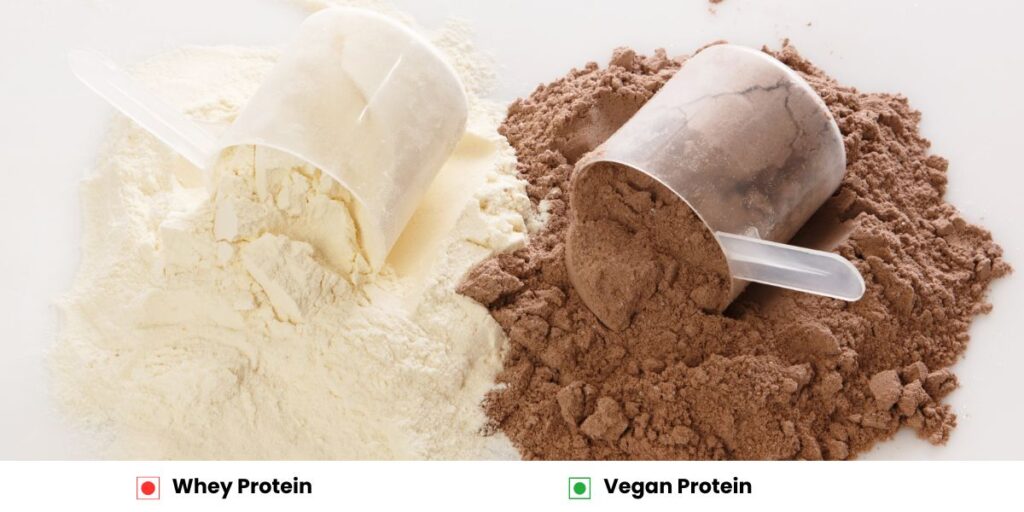
| Feature | Vegan Protein | Whey Protein |
| Digestibility | High (No bloating) | Low (Can cause gas/bloating) |
| Fiber Content | 2–6g per serving | 0g |
| Absorption | Moderate to Fast | Very Fast |
| Environment | Sustainable | Higher Carbon Footprint |
| Amino Acids | Complete (in blends) | Naturally Complete |
#FACT: For 90% of people, a high-quality vegan option is just as effective and often much more comfortable for the gut.
Potential Side Effects to Watch For
While generally safe, keep an eye out for:
- Temporary Bloating: If you aren’t used to fiber, start with half a scoop.
- Added Sweeteners: Avoid brands with excessive artificial sugars or “fillers.”
- Heavy Metals: Choose reputable brands that perform third-party testing (look for NSF or Informed-Sport seals).
How to Choose the Best Vegan Protein Powder
Before you buy, use this checklist:
- Look for a Blend: Pea + Rice is the gold standard for amino acid balance.
- Short Ingredient List: Ideally fewer than 10 recognizable items.
- Third-Party Tested: Ensures the product is free from contaminants.
- No “Fillers”: Avoid artificial colors and thickeners.
Frequently Asked Questions (FAQ)
Is vegan protein powder as effective as whey?
Yes. Research shows that muscle growth and strength gains are virtually identical when total protein intake is matched.
Can vegan protein build muscle?
Absolutely. As long as you are hitting your daily protein targets and training consistently, plant protein provides all the “building blocks” needed.
Does vegan protein contain all amino acids?
While some single sources (like rice) are low in certain aminos, blended powders provide a complete amino acid profile.
Sources
Muscle Growth, Recovery & Vegan vs Whey Protein
- Teixeira FJ, et al. (2022). “A Novel Plant-Based Protein Has Similar Effects Compared to Whey Protein on Body Composition, Strength, and Performance.”
https://pmc.ncbi.nlm.nih.gov/articles/PMC9355667/ - Lim MT, et al. (2021). “Animal Protein versus Plant Protein in Supporting Lean Mass and Muscle Strength: A Systematic Review and Meta-Analysis.”
https://pmc.ncbi.nlm.nih.gov/articles/PMC7926405/ - News-Medical (2025). “Plant-based protein blends can match whey for muscle recovery.”
https://www.news-medical.net/news/20250812/Plant-based-protein-blends-can-match-whey-for-muscle-recovery.aspx - Zhao S, et al. (2024). “The Effect of Plant-Based Protein Ingestion on Athletic Ability in Healthy People—A Bayesian Meta-Analysis.”
https://www.mdpi.com/2072-6643/16/16/2748
Digestion, Lactose Intolerance & Side Effects
- Health.com (2025). “Whey Protein vs. Plant Protein: Which Is Easier To Digest and Builds Muscle More Efficiently?”
https://www.health.com/whey-protein-vs-plant-protein-11915228 - Healthline. “Whey Protein vs Plant Protein.”
https://www.healthline.com/nutrition/whey-vs-plant-protein
Weight Management & Satiety
- Nunes EA, et al. (2022). “Systematic review and meta‐analysis of protein intake to support muscle mass and strength in healthy adults.” (covers protein’s role in fat loss and fullness)
https://onlinelibrary.wiley.com/doi/10.1002/jcsm.12922
Heavy Metals, Quality & Safety (Side Effects Section)
- Consumer Reports (2025/2026). “Protein Powders and Shakes Contain High Levels of Lead.”
https://www.consumerreports.org/lead/protein-powders-and-shakes-contain-high-levels-of-lead-a4206364640/ - Clean Label Project. “Protein Study 2.0 – Heavy Metals in Protein Powders.”
https://cleanlabelproject.org/protein-study-2-0/
General Nutritional Value & Plant-Based Benefits
- Medical News Today. “Best Vegan Protein Powders” (includes protein content, amino acids, and daily use safety).
https://www.medicalnewstoday.com/articles/best-vegan-protein-powder


