Widespread protests broke out across parts of Jammu and Kashmir after Iranian state media confirmed the death of Iran’s Supreme Leader, Ali Khamenei, at the age of 86. According to reports from Tehran, the Ayatollah died in the early hours of Saturday during alleged joint military strikes carried out by Israel and the United States.
The announcement triggered emotional scenes in the Kashmir Valley, particularly in Srinagar and Bandipora, where hundreds gathered in solidarity with Iran and mourned the cleric’s death.
Protests in Srinagar and Bandipora
Demonstrations were reported from multiple areas of Srinagar and Bandipora. Protesters carried portraits of Khamenei, waved black flags, and raised slogans condemning the alleged attack. Traditional Shia mourning rituals, including Nauha recitations, were witnessed on the streets.
Members of the Shia Muslim community described the loss as deeply personal. For many in Srinagar, Khamenei was not merely a political figure but a Marja-e-Taqlid — a religious authority whose guidance shaped their spiritual and social life.
One protester told news agency ANI:
“We have received news from Iran that revolutionary Supreme Leader Ali Khamenei is no more. He has been brutally killed by the US and Israel… We are all saddened by this incident…”
Local authorities monitored the situation closely to prevent escalation, though no major incidents of violence were immediately reported.
Political Reactions in Kashmir
The development also drew strong political reactions within the region. Mehbooba Mufti, president of the Peoples Democratic Party (PDP), sharply criticised Israel and the United States.
In a public statement, Mufti described the reported killing as a “deeply tragic & shameful point in history.” She accused Israel and the US of “boasting about the killing of Iran’s beloved leader Ayatollah Ali Khamenei” and expressed disappointment over what she termed the silence or support of several Muslim-majority nations.
Her remarks added a political dimension to the already sensitive situation in the Valley.
Who Was Ali Khamenei?
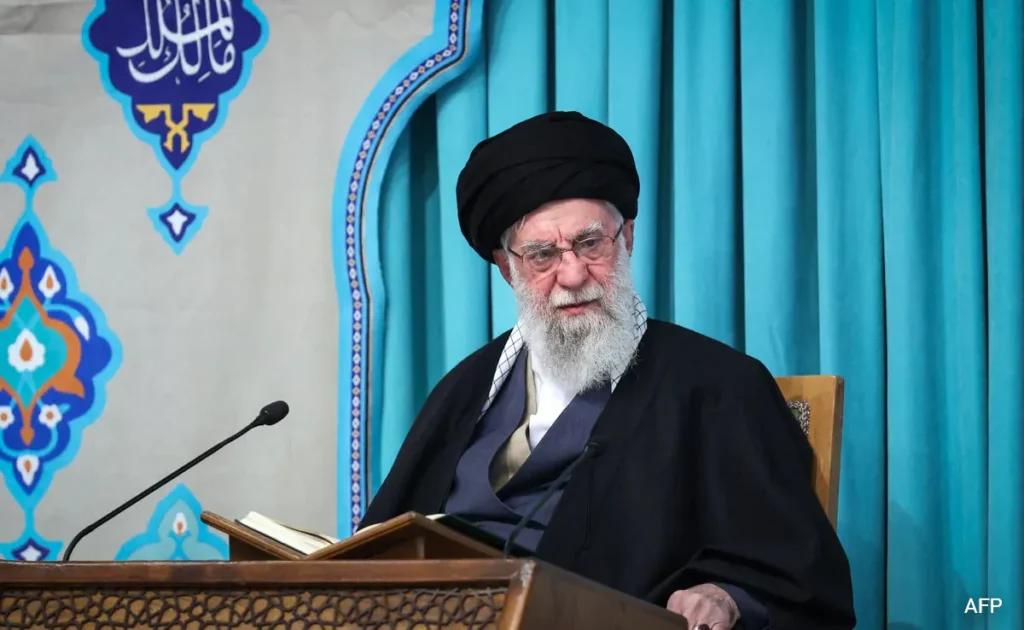
Ali Khamenei became Iran’s Supreme Leader in 1989 after the death of Ayatollah Ruhollah Khomeini. Over more than three decades, he consolidated clerical authority in Iran and shaped the country’s domestic and foreign policies.
Under his leadership:
- Iran expanded its regional influence across the Middle East.
- Relations with Israel remained openly hostile.
- Tensions with the United States intensified over nuclear and military issues.
- Iran faced multiple rounds of international sanctions.
As Supreme Leader, Khamenei held ultimate authority over Iran’s armed forces, judiciary, and state broadcasting, making him the most powerful figure in the Islamic Republic.
Regional and Global Implications
The reported circumstances surrounding his death — allegedly linked to joint military strikes — have significantly heightened geopolitical tensions in the region. Analysts warn that such an event could:
- Escalate military confrontation in the Middle East
- Trigger diplomatic crises between global powers
- Impact oil markets and global financial stability
- Intensify sectarian sensitivities in regions with strong Shia populations
In South Asia, particularly in Kashmir where Shia communities maintain religious and emotional ties with Iranian clerical leadership, the news has sparked visible unrest.
Community Sentiment in Kashmir
For the Shia community in Srinagar, the Ayatollah’s role went beyond geopolitics. Religious scholars note that many followers considered him their spiritual guide. His sermons and religious rulings were closely followed by segments of the Kashmiri Shia population.
Black flags, banners supporting Iran, and emotional chants signaled not only political protest but also religious mourning.
Security forces remain on alert in sensitive areas to maintain law and order as authorities monitor the evolving situation.
What Happens Next?
Iran has yet to formally outline the succession process following the Supreme Leader’s reported death. The Assembly of Experts, a powerful clerical body, is constitutionally responsible for appointing the next Supreme Leader.
Meanwhile, international observers are closely watching Tehran’s next steps — whether diplomatic retaliation, military response, or internal political transition.
As the situation develops, Kashmir remains tense but under control, with authorities urging calm and restraint.