
- How to Complete the Copyright Registration Procedure in India for Software and Online Content - August 30, 2026
- Provisional Patent Filing Process in India: Complete Guide to Costs, Forms and Deadlines - August 26, 2026
- Trademark Opposition Rules in India: Timeline & Evidence Filing - August 20, 2026
⚡ Quick Summary & Executive Takeaway
The Burger King Pune trademark battle was a 13-year dispute in which US-based Burger King Corporation sued a Pune eatery of the same name, run by Anahita and Shapoor Irani since the early 1990s. In July 2024, the Pune District & Commercial Court dismissed the suit under Section 34 of the Trade Marks Act, 1999, ruling the Iranis were honest prior users. Burger King Corporation’s appeal is still pending before the Bombay High Court, though the Supreme Court has allowed the Pune eatery to keep using the name in the meantime.
For any brand entering India, the Burger King Pune trademark battle is a costly reminder that a global registration doesn’t erase a local prior user’s rights. Burger King Corporation, whose mark has been on India’s Trade Marks Register since 1979 under the Controller General of Patents, Designs and Trade Marks (CGPDTM), did not open a single Indian outlet until 2014 — by which point a small Pune restaurant had traded under the same name for over two decades. The resulting suit, filed under the Trade Marks Act, 1999 and heard through the Pune District Court, Bombay High Court, and Supreme Court of India, shows exactly what happens when a multinational’s paper rights collide with a local trader’s genuine, provable market presence.
- Burger King Pune Trademark Battle: Timeline From Trial Court to the Supreme Court
- Passing Off vs Infringement: Why Burger King Corporation Lost Both Claims
- Litigation Cost, Fee & Timeline Breakdown for Trademark Disputes in India
- Legal & Business Lessons: What Burger King Corporation’s Loss Teaches Brand Owners
- Trademark Due-Diligence Checklist Before Entering a New Market
- Frequently Asked Questions
Burger King Pune Trademark Battle: Timeline From Trial Court to the Supreme Court
The burger king vs burger king pune case summary, in short: two decades of coexistence, a decade of litigation, and a final outcome still pending on appeal.
A Small Eatery Opens, Long Before the Global Chain Arrives (1989–1992)
Anahita and Shapoor Irani started their restaurant in Pune’s Camp area in 1989 and began operating it under the name “Burger King” from around 1992. Burger King Corporation had no restaurants anywhere in India at the time — its only footprint was a dormant 1979 trademark registration covering different goods.
Cease-and-Desist and the 2011 Suit
Burger King Corporation sent the Iranis a cease-and-desist notice in 2009, then filed Reg. Civil Suit No. 02/2011 before the Pune District Court, seeking a permanent injunction, delivery-up, and ₹20 lakh in damages for trademark infringement and passing off.
Thirteen Years of Trial
The suit dragged through evidence and cross-examination for over a decade — a timeline complicated by Burger King Corporation’s own market entry in 2014 (first outlet in Delhi) and expansion to Pune in 2015, which happened while the case was still pending.
The Pune Court’s Judgment (16 July 2024)
District Judge Sunil Vedpathak dismissed Burger King Corporation’s suit entirely. The burger king pune district court judgment found that the Iranis had used the name continuously since about 1992 — well before the corporation’s actual commercial use in India — and that the corporation had produced no evidence of consumer confusion or financial harm. The court also dismissed the Iranis’ own ₹20 lakh counterclaim for lack of evidence, awarding damages to neither side.
Bombay High Court Reinstates the Injunction
Burger King Corporation appealed. A Division Bench of the Bombay High Court stayed the trial court’s order and restrained the Iranis from using the name while the appeal was heard, directing both sides to preserve a decade of financial records.
The Supreme Court Steps In (7 March 2025)
The Iranis challenged that restraint before the Supreme Court. A Bench of Justices B.V. Nagarathna and Satish Chandra Sharma stayed the Bombay High Court’s order, noting the Pune eatery ran only two outlets against a global chain, and that an interim ban would cause disproportionate harm during a lengthy appeal. The Bombay High Court admitted the appeal for a full hearing shortly after.
Where It Stands Today
As of the latest available reporting, the Bombay High Court’s appeal remains pending on merits. The Supreme Court’s stay means Pune’s Burger King can keep trading under the name until that appeal is finally decided — so the Burger King Pune trademark battle is not yet over, even after 13-plus years.
Passing Off vs Infringement: Why Burger King Corporation Lost Both Claims
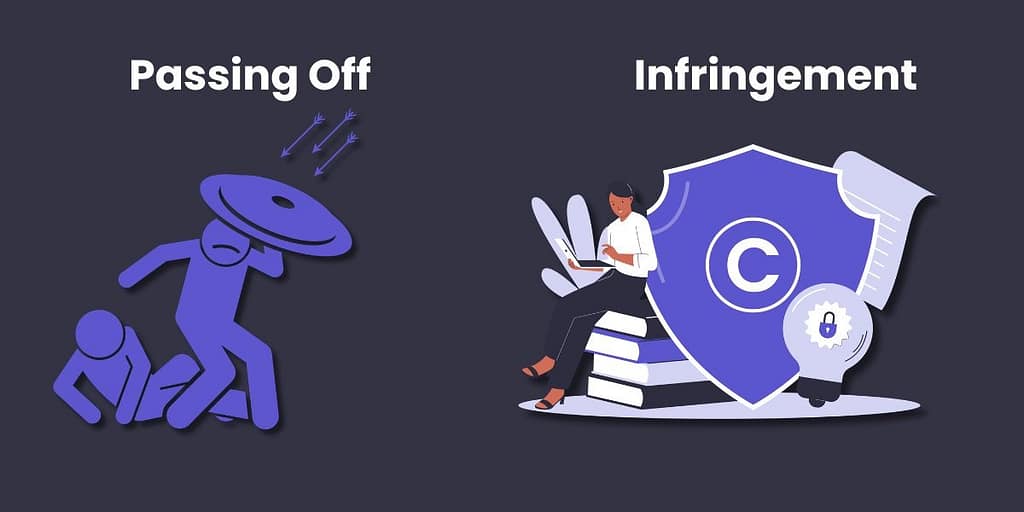
Trademark infringement and passing off are separate causes of action, and Burger King Corporation pursued both — a combined claim that Indian courts permit.
- Infringement is a statutory right available only to a registered proprietor. It doesn’t require proof of reputation in the specific market — only that the registration is valid and the defendant’s use is deceptively similar for the same or related goods/services.
- Passing off is a common-law tort available even without registration. It requires proving three things: goodwill in the relevant market, misrepresentation likely to deceive, and resulting damage — the “classic trinity.”
Burger King Corporation’s problem was Section 34, which overrides infringement rights in favour of an honest concurrent user whose use predates whichever is earlier of the registered proprietor’s own first use or registration for those goods/services. Because the Iranis’ restaurant use (1992) predated the corporation’s actual Indian operations (2014), Section 34 operated as a complete defence — and because the corporation had no Indian reputation for restaurant services before 2014, the passing-off claim failed on the same facts. This is the central lesson behind the burger king trademark infringement case details: registration alone rarely defeats decades of genuine local use.
Also Read: How to File a Trademark Objection Reply Online in India
Litigation Cost, Fee & Timeline Breakdown for Trademark Disputes in India
Neither party’s actual legal spend in this case is public, but the case’s own multi-forum journey is a realistic illustration of what a contested trademark dispute costs and how long it can run.
| Forum | This Case’s Real Timeline | Court Fee Structure | Typical Professional/Legal Fees | Typical Duration for Similar Suits |
|---|---|---|---|---|
| District / Commercial Court (trial) | Filed 2011 → decided 16 July 2024 (~13 years) | Ad valorem, based on suit valuation (varies by state; nominal for injunction-only relief) | ₹1–5 lakh+ for drafting, evidence, and full trial representation | 2–5 years typically; this case was a significant outlier |
| High Court (First Appeal) | Stay granted 2024; appeal admitted March 2025; still pending | Ad valorem appeal court fee, separate from trial court fee | ₹2–8 lakh+ depending on complexity and hearings | 1–3 years for a full appeal hearing |
| Supreme Court (SLP) | Filed and decided (interim stay) within days in March 2025 | Fixed SLP filing fee plus senior counsel fees | Often the highest per-hearing cost given senior counsel briefs | Interim relief can come in weeks; final SLP disposal varies widely |
← Swipe to see full table →
Note: Court fees in India are ad valorem (percentage-based on the suit’s claimed value) rather than a flat statutory amount, so actual figures vary by state and relief sought. Always confirm current fee schedules with the relevant High Court or Commercial Court registry before filing.
Legal & Business Lessons: What Burger King Corporation’s Loss Teaches Brand Owners
Delayed enforcement is a real legal risk, not just a business inconvenience. Burger King Corporation held its Indian registration since 1979 but did not act against the Pune eatery until a 2009 cease-and-desist — three decades after the mark was registered and roughly 17 years after the Iranis adopted the name. That delay directly strengthened the prior-use defence.
- No pre-entry trademark search in the target market. A basic local search before 2014 would have surfaced an established “Burger King” restaurant in Pune, allowing the corporation to negotiate, acquire, or route around the conflict before committing to Indian expansion.
- Weak evidentiary discipline. Reporting on the judgment notes the plaintiff’s supporting affidavit had verification defects and relied on hearsay testimony — a reminder that even a strong brand argument fails without properly proven facts under the Civil Procedure Code and Evidence Act.
- Assuming global fame equals local rights. Courts require proof of confusion and damage in the specific territory; international reputation alone does not satisfy passing off in India.
- For the defending side: a counterclaim for damages needs its own solid evidence — the Iranis’ ₹20 lakh counterclaim was dismissed for the same reason the corporation’s claim failed: insufficient proof.
Trademark Due-Diligence Checklist Before Entering a New Market
✅ Before Launching a Registered Brand in a New Country
- Run a local trademark register search AND a common-law/market-use search
- Check for identical or deceptively similar names already trading locally
- Verify the earliest date your own mark was used (not just registered) in that market
- Document your own first use with dated, verifiable evidence (invoices, ads, listings)
- Identify potential Section 34-style prior users before committing to expansion
- If a conflict exists, consider coexistence, licensing, or buyout before litigation
- If litigation is unavoidable, build a confusion/damage evidence file from day one
Frequently Asked Questions
What was the outcome of the Burger King case in Pune?
The Pune District & Commercial Court dismissed Burger King Corporation’s suit on 16 July 2024, ruling the local eatery’s owners were honest prior users under Section 34 and awarding no damages to either side. Burger King Corporation’s appeal is still pending before the Bombay High Court, with the Supreme Court currently allowing the Pune restaurant to keep using the name.
Who are the owners of Burger King Pune?
The Pune eatery was founded and run by Anahita Irani and her husband, Shapoor Irani, a Parsi couple who started the restaurant in 1989 and traded as “Burger King” from around 1992. Shapoor Irani passed away on 15 June 2026, shortly after the family’s Supreme Court relief in the case.
Did Burger King have a lawsuit in India?
Yes — Burger King Corporation filed Reg. Civil Suit No. 02/2011 against the Pune restaurant’s owners in 2011, alleging trademark infringement and passing off and seeking ₹20 lakh in damages. The suit was dismissed at trial in 2024, and the case remains under appeal in the Bombay High Court as of the latest reporting.
Is the Burger King Pune trademark case still ongoing?
Yes. While the trial court ruled for the Pune eatery in 2024 and the Supreme Court granted it interim relief in March 2025, the underlying appeal filed by Burger King Corporation is still pending before the Bombay High Court, so the case has not reached a final, binding conclusion.
Discover more from EcoLaw
Subscribe to get the latest posts sent to your email.